
How Does Our Factory Make the Rigid Paper Box?
Many buyers see a rigid box and think it is only printed paper. That mistake creates weak corners, color risk, delays, and higher hidden cost.
We make a rigid paper box through structure confirmation, sampling, printing, surface finishing, greyboard cutting, grooving, forming, wrapping, inspection, packing, and shipment control. Each step affects strength, color, hand feel, price, and delivery risk.
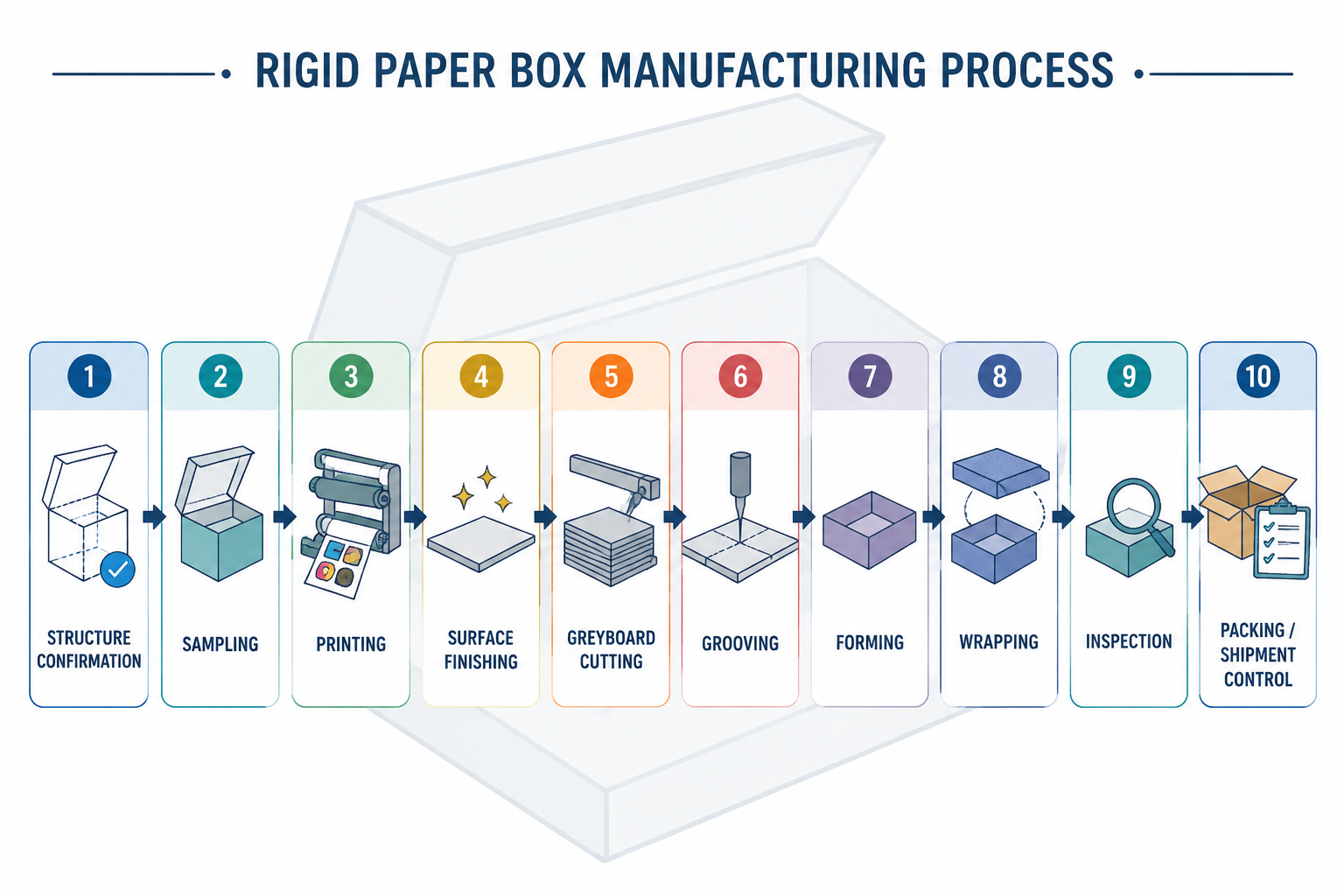
I have seen many first-time rigid box projects start with one simple sentence: “We just need a nice paper box.” I understand that sentence. The final product looks clean and simple. The real factory work is not simple. A rigid box needs a stable inner board, correct groove depth, clean printed paper, smooth surface finish, tight wrapping, and careful inspection. If one step goes wrong, the box may still look like a box, but it will not feel like premium packaging. I write this article from our daily factory production and customer order experience, so brand owners and procurement managers can see what really happens before a rigid paper box reaches their warehouse.
Why Is a Rigid Paper Box Not Just Printed and Folded Paper?
A folding carton can be printed and folded fast. A rigid box cannot. If we treat both boxes the same, the final box loses shape and value.
We make rigid paper boxes with greyboard, printed wrap paper, forming, mounting, and edge wrapping. The box shape comes from board structure and hand or machine forming, not from simple paper folding.
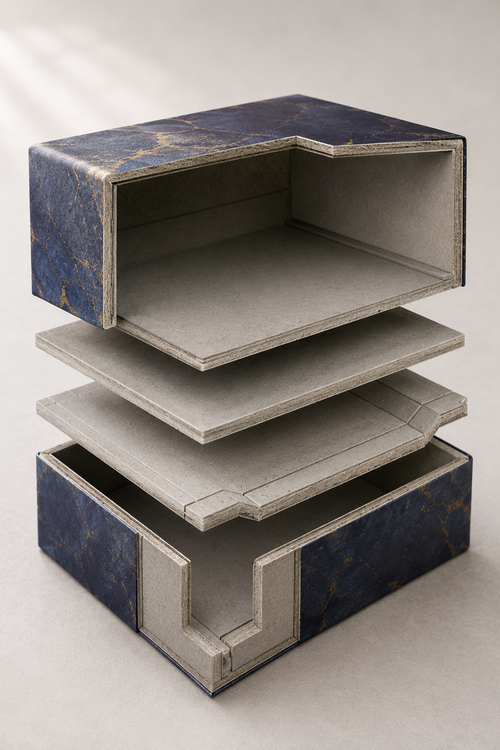
In our factory, I always explain this point early because it prevents wrong expectations. A folding carton usually uses one sheet of paperboard. It is printed, die-cut, creased, folded, and glued. A rigid paper box uses thick greyboard as the main body. We cut and groove the greyboard. We form it into a box shape. We mount printed paper outside the board. We wrap edges and corners to create a neat finish.
This difference changes the whole project. The greyboard controls the box strength. The groove controls the box angle. The wrap paper controls the brand look. The surface finish controls touch and protection. The forming work controls the final premium feeling. A luxury skincare box, a candle gift box, and a magnetic gift box may all be “rigid boxes,” but their structures can be very different.
| Item | Folding Carton | Rigid Paper Box | Buyer Impact |
|---|---|---|---|
| Main material | Paperboard sheet | Greyboard plus wrap paper | Rigid box feels stronger and heavier |
| Main process | Print, cut, fold, glue | Cut, groove, form, wrap | Rigid box needs more process control |
| Shape source | Creasing and folding | Board structure and forming | Bad structure causes poor fit |
| Premium feel | Medium | High | Better for gifts and luxury retail |
This is why we do not quote a rigid box only by size. We need to know the style, board thickness, wrap paper, finish, insert, and packing method. Each detail changes factory work and buyer outcome.
How Do We Confirm the Structure and Sample Before Mass Production?
A wrong structure looks cheap even with beautiful printing. If we skip sampling, we may only find the problem after mass production starts.
We confirm box style, size, material, insert, opening method, and artwork before bulk production. We use sampling to check fit, proportion, strength, appearance, and production feasibility.
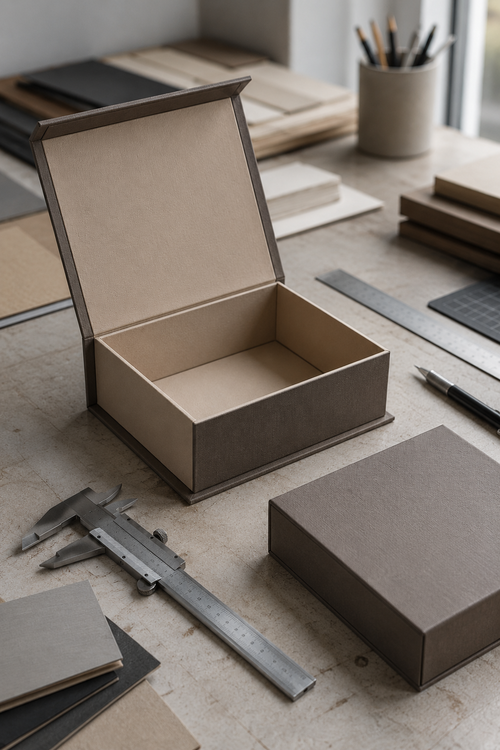
In our customer orders, the structure stage is where many future problems are solved. I first ask for the product size, product weight, selling channel, and packing purpose. A box for a glass candle jar needs different support from a box for a silk scarf. A drawer box needs smooth sliding. A hinged lid box needs a stable opening angle. A two-piece box needs proper tightness between lid and base.
After we understand the use, we confirm size. We do not only look at the outside size. We check inner size, wall thickness, insert space, and product tolerance. If the product is too tight, the customer may struggle during packing. If the product is too loose, the box may feel cheap. For gift sets, we also check the gap between items because poor spacing hurts the retail look.
| Structure Checkpoint | What We Check | Why It Matters |
|---|---|---|
| Product fit | Inner size and tolerance | Product must be easy to pack and stable |
| Box style | Lid and base, drawer, hinged lid, book style | Different styles have different cost and risk |
| Board thickness | Greyboard thickness and box size | Strength and hand feel depend on it |
| Insert design | Paper, EVA, pulp, or cardboard insert | Product protection and display depend on it |
| Opening feel | Lid tightness or drawer movement | User experience depends on it |
Sampling is not only for showing beauty. It is a factory test. We check whether the structure can be made with stable quality. We also check whether the wrap paper can cover corners well. When the sample is approved, mass production becomes much safer.
How Do Printing and Surface Finishing Affect the Final Box?
A rigid box can have strong structure but still fail the brand if the color looks wrong or the surface feels poor.
We print the wrap paper before mounting it onto greyboard. Printing controls brand color and image clarity. Surface finishing controls touch, protection, shine, and shelf appearance.
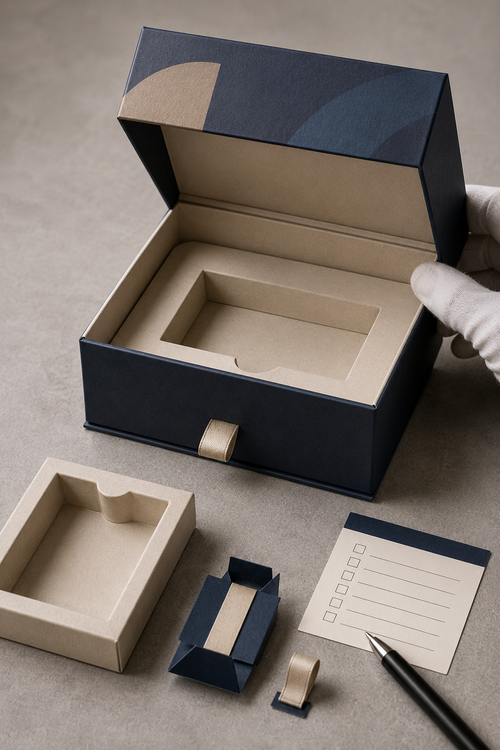
In our production, printing happens before the box body is wrapped. That means we must control the printed paper first. For many European and North American brands, color consistency is a serious issue. A skincare brand may need a soft beige. A candle brand may need a deep black. A chocolate brand may need a warm gold tone. Small color changes can make packaging look off-brand.
We check artwork files, color mode, bleeding area, text position, and finishing marks before production. If the artwork has thin lines near the folding or wrapping edge, we warn the customer early. After printing, we may add matte lamination, gloss lamination, soft touch lamination, varnish, foil stamping, embossing, debossing, or texture paper. These finishes are not only decoration. They also change cost, lead time, hand feel, and surface durability.
| Finish | What I Usually See | Buyer Outcome |
|---|---|---|
| Matte lamination | Smooth low-shine surface | Clean and modern look |
| Gloss lamination | Bright reflective surface | Strong color and retail shine |
| Soft touch lamination | Velvet-like touch | Premium hand feel |
| Foil stamping | Metallic logo or pattern | Strong brand focus |
| Embossing or debossing | Raised or pressed area | More tactile brand detail |
| Spot UV | Gloss area on matte base | Contrast and visual depth |
I often tell buyers to choose finishing based on brand position, not only based on trend. A simple kraft rigid box can look premium if the structure and print are balanced. A highly finished box can still look poor if the artwork and wrapping are not well controlled.
How Do Greyboard Cutting, Grooving, Forming, and Wrapping Create the Premium Feel?
A rigid box looks simple from outside. Inside the factory, small errors in board cutting or corner wrapping can make it look cheap.
We cut and groove greyboard to build the box skeleton. We form the board into shape, mount printed paper, wrap edges, and control corners for a clean premium appearance.
The greyboard stage is the backbone of the rigid box. In our factory, we cut greyboard according to approved structure size. Then we groove the board where the box needs sharp angles. The groove must be controlled well. If the groove is too shallow, the corner may be round or forced. If the groove is too deep, the board may become weak. This is one reason rigid box production needs real hands-on control.
After cutting and grooving, we form the board into the box shape. Then we mount the printed paper onto the board. The paper must align with the box correctly. If the paper shifts, the logo may not sit in the right position. If the glue is not controlled, bubbles, wrinkles, or loose edges can appear. Corners are also very important. Bad corner wrapping is easy to see on premium packaging.
| Process Step | Factory Control Point | Visible Result |
|---|---|---|
| Greyboard cutting | Size accuracy | Box shape stays stable |
| Grooving | Depth and line position | Corners look sharp |
| Forming | Square angle and body alignment | Lid and base fit better |
| Mounting | Paper position and glue control | Logo and artwork stay correct |
| Edge wrapping | Tightness and neat folding | Box looks clean from every side |
| Corner work | Corner overlap and pressure | Premium appearance improves |
I always pay attention to the corners when I check a rigid box. The corner tells me a lot about production quality. A clean corner means the structure, board, paper, glue, and worker operation are all under control.
How Do We Inspect, Pack, and Ship Rigid Paper Boxes With Lower Risk?
A box may pass one quick look but still create problems after long transport. Weak inspection and poor packing increase buyer risk.
We inspect during production and after finishing. We check color, size, structure, surface, corners, glue, fit, quantity, packing, and carton strength before shipment.
In our factory production, quality control does not start at the final table. It starts from material receiving and continues through printing, finishing, forming, wrapping, and packing. If we only inspect at the end, we may discover a problem too late. That can waste material and delay delivery. I prefer to find issues during the process because small corrections are easier at that time.
For rigid boxes, we usually check printed color, surface scratches, foil position, embossing result, paper alignment, glue marks, corner tightness, box size, lid fit, drawer movement, and insert placement. We also check if the box surface is easy to rub during packing. Some finishes need extra care because soft touch surfaces and dark matte paper can show marks more easily.
| Inspection Stage | What We Check | Why It Matters |
|---|---|---|
| Material check | Paper, greyboard, special paper | Wrong material changes feel and strength |
| Printing check | Color, text, image clarity | Brand consistency depends on it |
| Finishing check | Lamination, foil, embossing | Surface value depends on it |
| Forming check | Shape, angle, fit | Structure must be stable |
| Wrapping check | Edges, corners, glue marks | Premium look depends on detail |
| Packing check | Carton loading and protection | Boxes must survive transport better |
Packing is also part of quality. We choose carton packing based on box size, surface finish, and shipping method. A rigid box can be damaged by pressure, friction, or moisture during long-distance transport. We cannot remove every shipping risk, but we can reduce common risk with better inner packing, carton layout, and clear quantity control.
Why Do Rigid Paper Box Prices Vary So Much?
A low price can look attractive, but unclear cost logic creates risk. A high price also needs a clear reason.
We quote rigid paper boxes based on material, structure, size, printing, finishing, labor difficulty, quantity, inspection needs, packing method, and shipment requirements.
From customer order experience, I know price comparison is a normal part of procurement. I also know rigid box prices can confuse buyers because two boxes may look similar in photos but cost very differently in factory production. The reason is not random. The hidden work behind the box may be different.
Material is one cost factor. Thicker greyboard, special paper, FSC-certified paper, textured paper, and imported art paper can change price. Structure is another factor. A simple lid and base box is different from a hinged lid box with magnet closure and ribbon puller. Finishing also changes cost. Foil stamping, embossing, soft touch lamination, spot UV, and special texture all add process steps. Labor difficulty matters too. Small boxes with tight corners can sometimes be harder to wrap than larger simple boxes.
| Cost Factor | Price Impact | What I Ask Buyers to Confirm |
|---|---|---|
| Box size | More material and larger packing volume | Exact inner and outer size |
| Board thickness | More strength and heavier feel | Product weight and brand level |
| Box structure | More forming work | Lid style, drawer, hinge, magnet |
| Printing | Color and artwork complexity | CMYK, Pantone, full print area |
| Surface finishing | Extra process and setup | Lamination, foil, embossing, UV |
| Quantity | Setup cost spread across units | Order quantity and repeat plan |
| QC and packing | More control and protection | Retail standard and shipping route |
I do not think buyers should only choose the cheapest offer. I also do not think buyers should accept a high quote without explanation. A good quotation should connect price with real production choices. If a buyer sends us box style, size, material preference, quantity, artwork, and finishing needs, we can check feasibility and give a more useful quotation.
Conclusion
A rigid paper box needs controlled structure, material, finishing, forming, wrapping, inspection, and packing. Send us your details, and we can evaluate production feasibility.