
Comprehensive Interpretation of “Green Packaging”: What Should Brands Really Choose?
Comprehensive Interpretation of “Green Packaging”: What Should Brands Really Choose?
I often see brands feel pressure to look greener. The risk is clear. A loose claim can raise cost, weaken protection, and create doubt.1
I understand green packaging as a practical packaging choice, not a single material name. I look at material source, box structure, printing, finishing, certification support, product protection, shipping route, retail display, and the claim the brand needs to support.
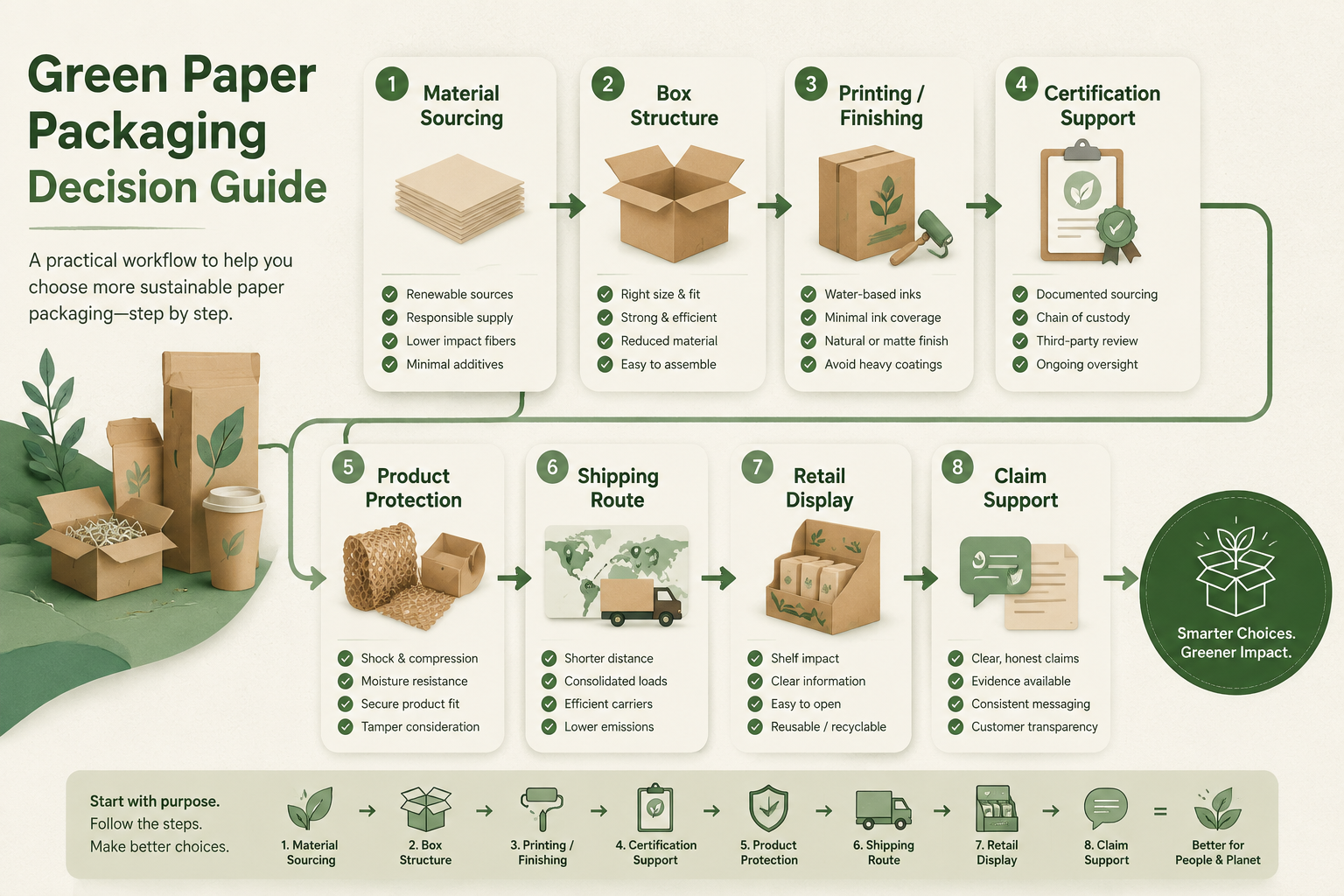
When a European or North American client asks me for “eco-friendly packaging,” I do not start with one material. I start with the product. I ask how heavy it is, how fragile it is, where it will sell, how it will ship, and what claim the brand wants to make. This small change makes the discussion more useful. It moves the topic away from a vague green idea. It turns it into a real packaging decision that the brand can review, test, and document.
Why Should I Treat Green Packaging as a Decision Instead of a Label?
I have seen many projects slow down because the first request was too broad. “Green” sounded good, but nobody knew what it meant.
I treat green packaging as a decision process. I define the product need, shipping method, display need, material source, printing method, finishing choice, certification need, and document request before I suggest a paper box, paper tube, or paper bag.
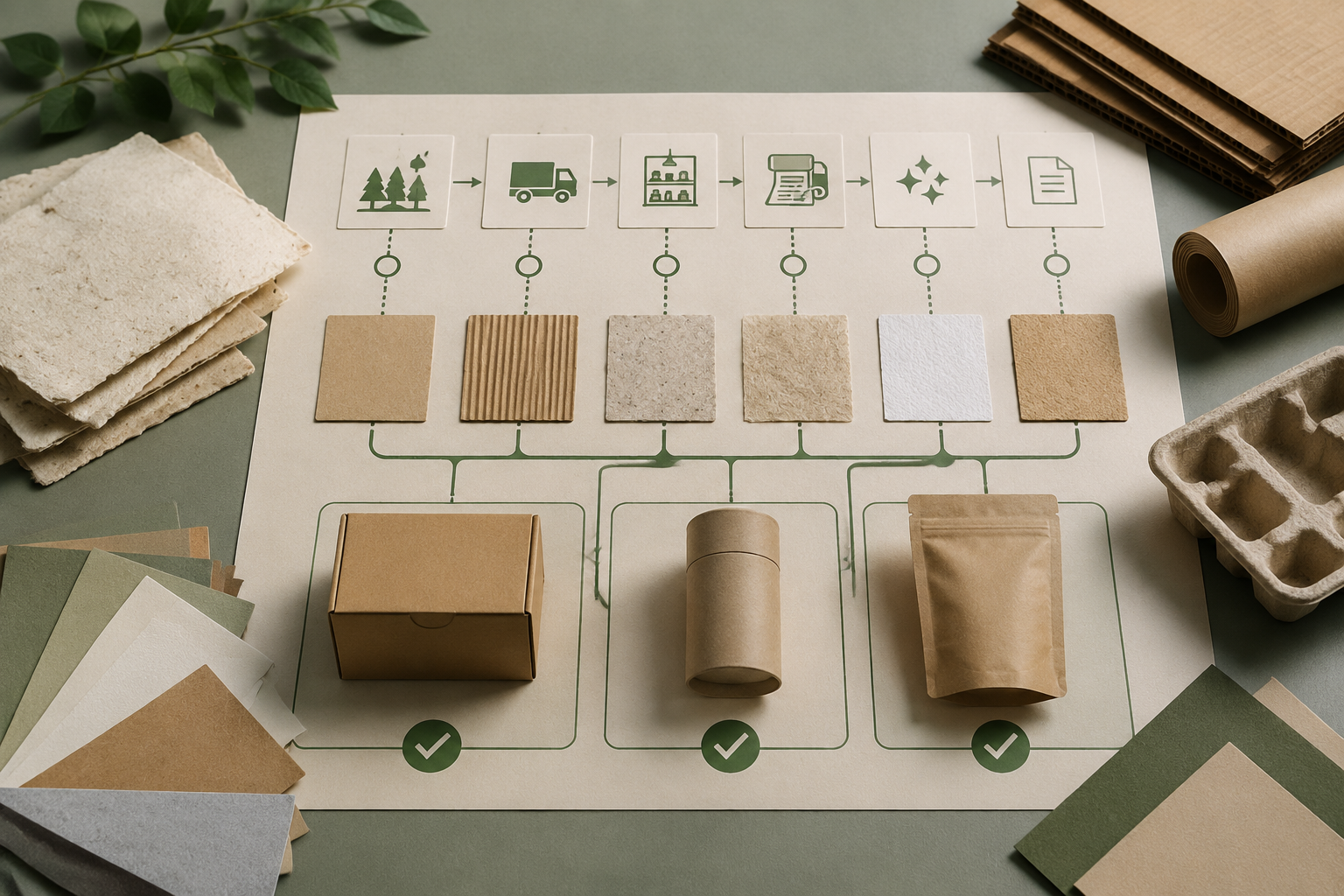
I Start With the Product
A skincare jar, a candle glass, and a chocolate gift set do not need the same packaging. I first check the weight, break risk, moisture risk, and shelf display need. A light serum bottle may work with a folding carton and paper insert. A heavy candle may need a rigid box or corrugated insert. A food product may need extra checks for food contact needs, grease resistance, or inner wrapping.
I Match the Claim With the Packaging Choice
A brand may want to say FSC-certified, recyclable, recycled content, plastic-reduced, or low-ink coverage. Each claim points to a different choice. I do not treat them as one thing.
| Decision Point | What I Check | Why It Matters |
|---|---|---|
| Product | Weight, size, fragility | I need the package to protect the item |
| Market | EU, USA, Canada, or other | I need the client to verify local rules |
| Material | FSC paper, recycled paper, kraft paper | I need the material to match the claim |
| Structure | Folding carton, rigid box, tube, bag | I need enough strength without waste |
| Finish | Lamination, foil, varnish, texture | I need shelf appeal and easier recycling review |
| Documents | FSC claim, material info, supplier records | I need the procurement team to review proof |
I see green packaging as a balance. If I remove too much structure, the product may break. If I add too much decoration, the environmental claim may become harder to support.2 The useful answer sits between these two sides.
Is Paper Packaging Always Green?
I hear this question often from brand owners. Paper feels natural. That feeling can help marketing, but it can also hide real details.
I do not say paper packaging is automatically green. I check paper source, recycled or FSC-certified content, structure efficiency, coating, lamination, ink, glue, decoration, and whether the design avoids unnecessary layers or oversized packaging.
I Do Not See Paper as a Shortcut
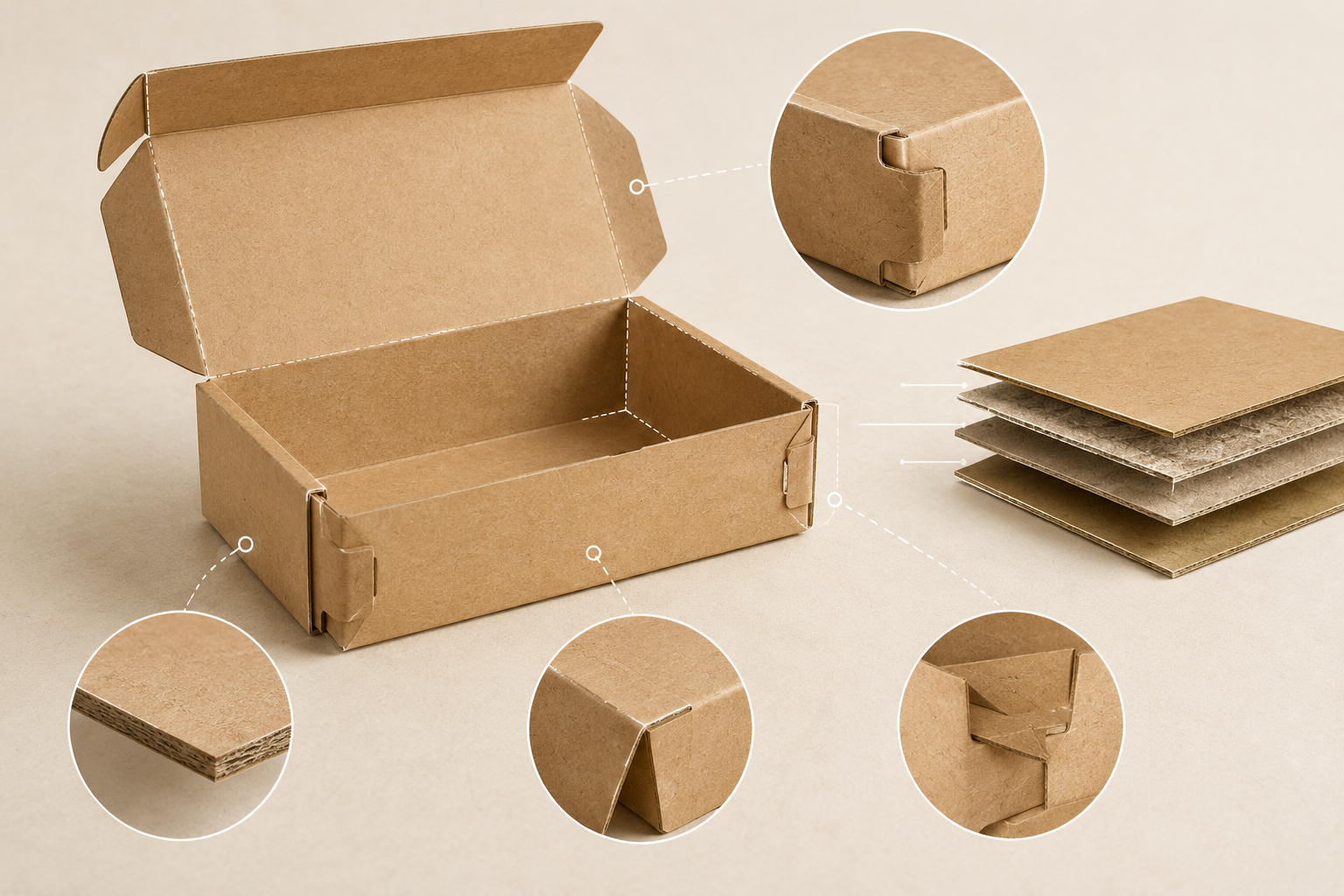
Paper can be a better choice in many projects. It can replace some plastic parts. It can also support strong shelf display. But paper still comes from resources. The way it is sourced and processed matters. A thick rigid box with many layers, plastic lamination, magnets, foam inserts, and heavy foil may not support the same claim as a simple FSC folding carton.
I Look at the Whole Package
When I review a paper box, I do not only look at the outer paper. I also look at the greyboard, white card, kraft paper, glue, lamination, ink, varnish, ribbon, handle, window film, and insert. A small window may help the customer see the product. But it may also add another material that affects recycling review.3 A matte film may look premium. But some brands may prefer water-based varnish if they want to reduce plastic film.
| Packaging Part | Greener Direction I May Discuss | Trade-Off I Explain |
|---|---|---|
| Paperboard | FSC-certified or recycled options | Color, stiffness, and price may change |
| Insert | Paper insert instead of EVA foam | Protection must be tested |
| Surface | Varnish instead of plastic lamination | Scratch resistance may be lower |
| Printing | Lower ink coverage or soy-based ink option4 | Color effect may differ |
| Decoration | Less foil or smaller foil area | Luxury look may be softer |
| Structure | Right-size box | Product fit and retail impact must remain strong |
I like paper packaging because it gives many design choices. But I still ask clients to avoid over-packaging. A smaller box, a better insert, and a simpler finish can often support a clearer green direction than a large box with many mixed materials.
What Do FSC, Recyclable, Recycled, Biodegradable, Compostable, and Sustainable Really Mean?
I often receive one inquiry that uses all these words together. I understand the intent, but I need to separate them before quoting.
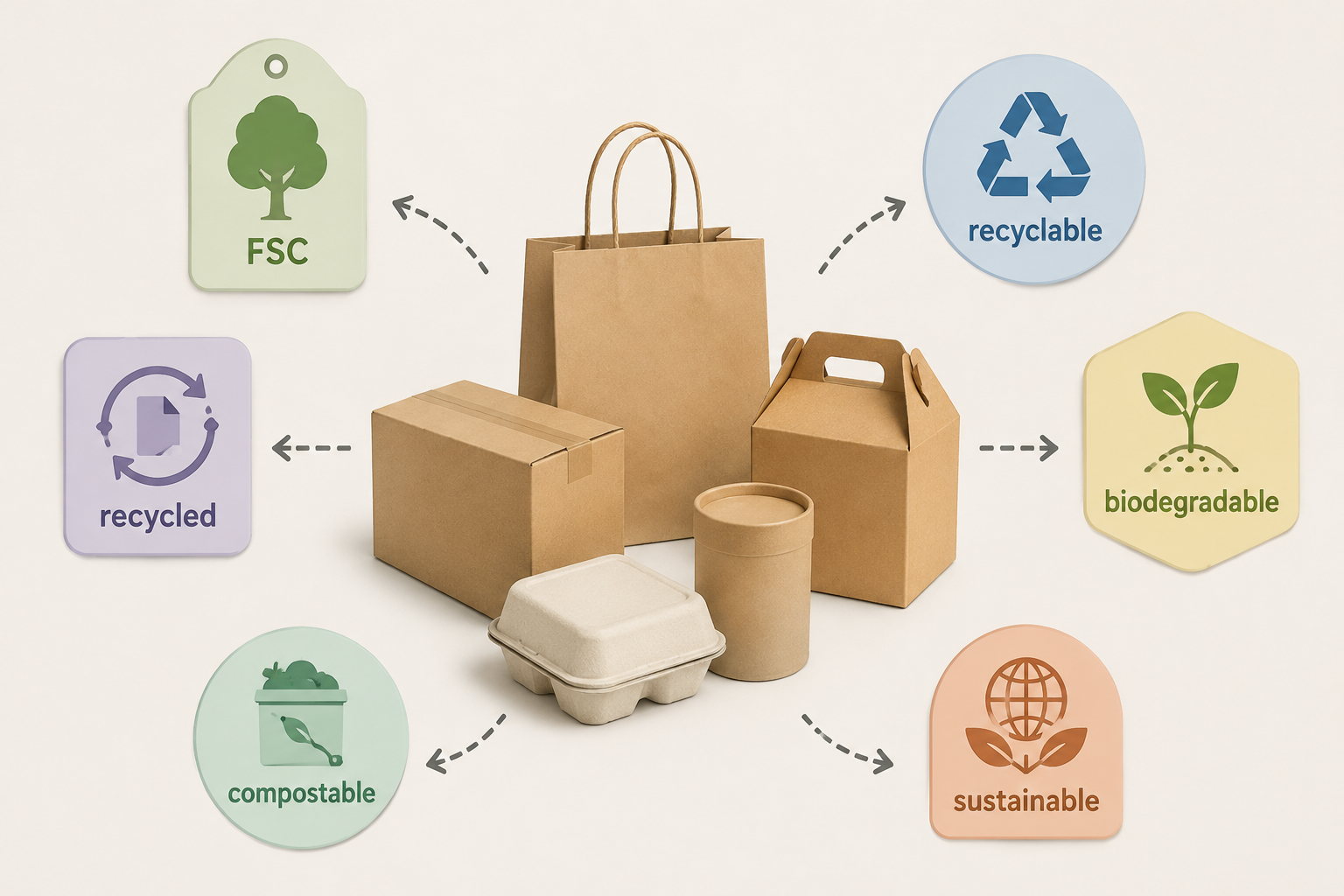
FSC-certified, recyclable, recycled paper, biodegradable, compostable, and sustainable are different claims. I treat them as separate points. Each one needs a different material choice, design review, and proof from suppliers, certifiers, or testing bodies when needed.
I Separate the Words Before I Select Materials
FSC-certified means the paper comes from a forest management and chain-of-custody system under FSC rules.5 It does not mean the package is automatically recyclable or compostable. Recycled paper means the paper includes recovered fiber. It does not mean the source is FSC unless it is certified as such. Recyclable means the packaging may be accepted in a recycling stream, but local facilities and mixed materials matter.6 Biodegradable and compostable are also not the same.7 Compostable claims usually need specific conditions and proof.
I Ask What Claim the Brand Wants to Put on the Package
A procurement manager may only need FSC supporting documents. A marketing team may want a recyclable claim. A compliance team may ask for test reports or supplier declarations. I can help explain packaging choices and provide supplier-side documents within my role. I do not act as a legal authority or lab.
| Term | What I Understand It To Mean | What I Usually Check |
|---|---|---|
| FSC-certified | Paper source is controlled under FSC system | FSC material availability and document support |
| Recycled paper | Paper contains recovered fiber | Content level, color, strength, and surface |
| Recyclable | Package may enter recycling stream | Mixed materials, lamination, window, glue, local rules |
| Biodegradable | Material can break down under conditions | Proof, test basis, and exact material |
| Compostable | Material can compost under set conditions | Certification, conditions, and market rules |
| Sustainable | Broad direction, not one fixed material8 | Whole design, source, waste, transport, and claim |
I prefer clear words. If a client says “eco,” I ask which claim matters most. This avoids confusion later. It also helps the buyer compare quotations fairly, because one supplier may quote basic kraft paper, while another may quote FSC paper with specific documents.
How Do Green Choices Change Beauty, Food, Candle, and Gift Packaging?
I have handled many sample requests where the design looked beautiful on screen. The hard part came when the product, finish, and green claim met the real factory process.
Green packaging choices change by application. I check shelf appeal, product protection, surface finish, food or cosmetic needs, insert material, shipping strength, and procurement documents before I suggest a structure for beauty, food, candle, or gift packaging.

I See Different Risks in Each Category
Beauty and skincare brands often care about a premium look. They ask for rigid boxes, soft-touch finishes, foil stamping, embossing, and inserts. I may suggest FSC paper, paper inserts, less plastic film, or controlled foil areas. But I still need the box to protect glass bottles and pumps.
Food, chocolate, and bakery brands often ask about kraft paper, white card, food-related inner packaging, and grease concerns. I remind clients that outer paper packaging and direct food contact packaging are not the same. They should verify food contact requirements with relevant standards and labs.9
Candle and aromatherapy brands often need strong packaging because glass jars are heavy. A thin paper box may look greener, but it may fail in shipping. In this case, a right-size rigid box, corrugated mailer, or paper insert may reduce damage and returns.
| Application | Common Green Direction | Main Trade-Off |
|---|---|---|
| Skincare box | FSC paper, paper insert, reduced lamination | Premium touch and scratch resistance |
| Chocolate box | Paper board, kraft look, simple print | Food contact and grease barrier review |
| Candle box | Strong paperboard, snug insert | Higher material use for better protection |
| Gift box | Reusable rigid box, less mixed material | Cost and shipping weight |
| Kraft paper bag | FSC or recycled kraft, paper handle | Load strength and print color brightness |
I do not push one structure for every category. I look at how the customer opens the package, how the product sits on the shelf, and how the shipment travels. A package that prevents breakage can also reduce waste.10 Protection is part of the green discussion.
How Should I Prepare an Inquiry for Credible Green Packaging?
I have seen good projects move faster when the buyer prepares clear information. I have also seen delays when the request only says “best eco box.”
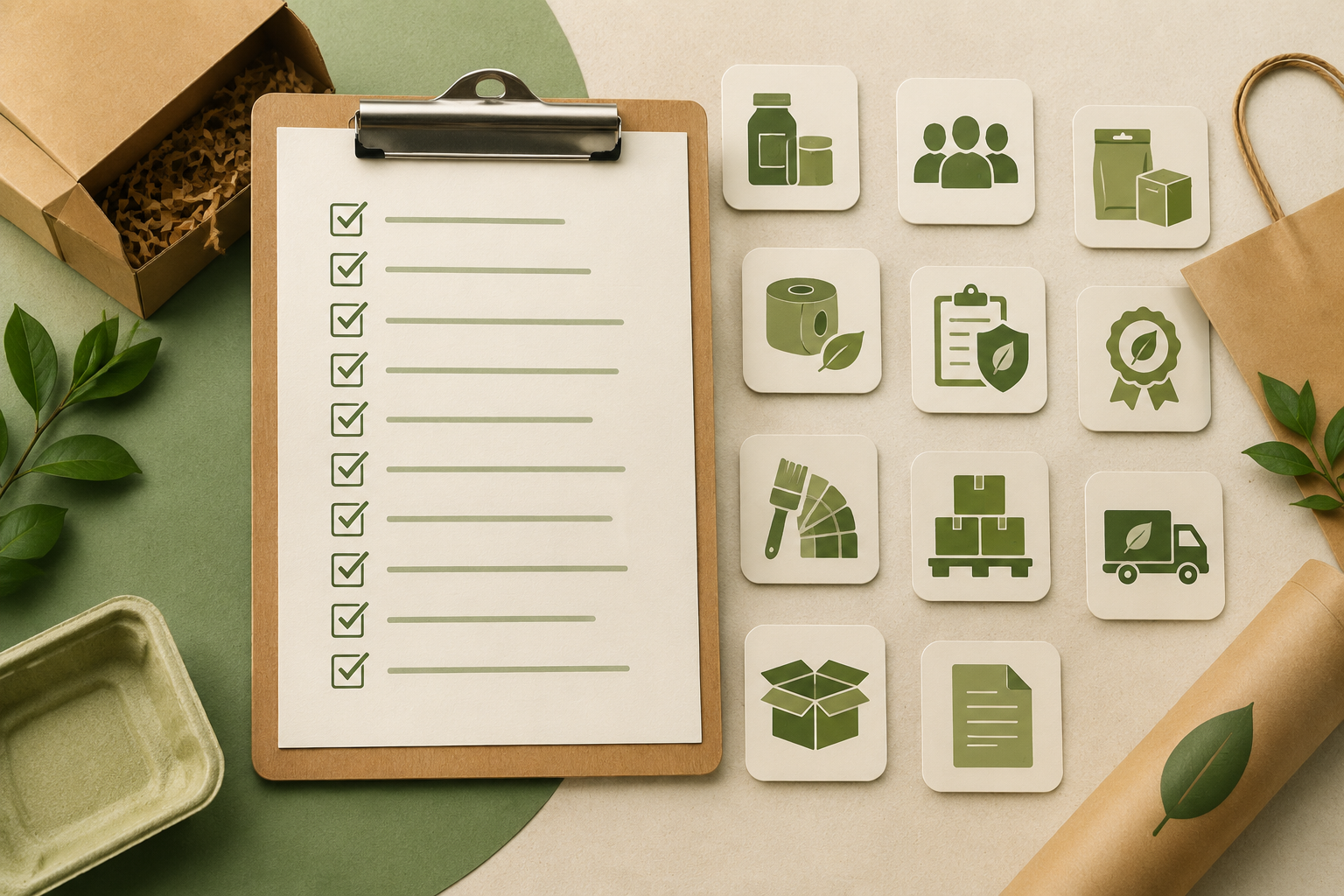
I suggest buyers prepare product details, target market, packaging style, material preference, claim requirement, certification need, artwork, order quantity, shipping method, sample request, and document needs before asking for a green packaging quotation.
I Ask for Practical Details First
When I receive a serious inquiry, I ask for the product size and weight. I ask if the product is glass, liquid, powder, food, candle, apparel, electronics, or a gift set. I ask where the product will sell. I ask whether the packaging is for retail shelf, e-commerce shipping, holiday gift sales, or wholesale distribution. These answers affect the structure.
If the client wants FSC material, I need to know whether the FSC logo will appear on the packaging. If yes, the claim process and document needs become more specific. If the client wants recyclable packaging, I need to know which market will review that claim. I can provide material and production information, but the client should verify label claims with its own compliance team, certifier, or legal advisor.11
I Use Samples to Reduce Risk
A paper box sample can show size, structure, opening feel, paper surface, and print direction. A sample may not show final mass production color perfectly, but it helps the team avoid major mistakes. For heavy or fragile products, I suggest a fit test and a shipping test where needed.
| Inquiry Item | What I Need From the Buyer | Why It Helps |
|---|---|---|
| Product details | Size, weight, material, fragility | I can suggest the right structure |
| Target market | EU, USA, Canada, or other | The claim review may differ |
| Claim goal | FSC, recycled, recyclable, plastic-reduced | I can select matching materials |
| Packaging style | Rigid box, folding carton, tube, bag, mailer | I can quote the right process |
| Finish choice | Lamination, varnish, foil, embossing | I can explain trade-offs |
| Documents | FSC support, material info, declarations | Procurement can review the supplier |
| Sample plan | Blank sample or printed sample | The team can test fit and look |
I think a good green packaging inquiry should be specific. It does not need to be perfect. It only needs enough facts for a supplier to give useful options. This makes the quotation clearer and lowers the risk of greenwashing, weak packaging, or failed internal review.
Why Does Green Packaging Need Supplier Discussion and Documentation?
I know buyers want fast quotes. I also know that a fast quote without material details can cause trouble later.
I believe credible green packaging needs supplier discussion and basic documentation. The buyer and supplier should confirm material source, structure, finish, certification need, sample result, mass production process, and the documents needed for procurement review.

I Keep the Discussion Connected to Production
A green packaging idea must pass through machines, material supply, printing, die-cutting, gluing, folding, handwork, packing, and shipping. A beautiful idea may become hard to produce if the paper cracks, the glue does not hold, or the finish does not match the claim. I discuss these details early because I want the sample to reflect real production.
For example, recycled paper may have a different surface. The print color may look less bright than on coated white paper.12 Kraft paper has a natural tone, so white ink, light colors, and fine lines need careful review. FSC paper may be available in several grades, but lead time and price can differ. A plastic window can improve display, but it may make a recyclable claim harder to support. These are not small points. They shape the final packaging decision.
I Treat Documents as Part of the Product
Many overseas procurement teams ask for FSC support, ISO-related factory information, SGS reports, material details, or supplier declarations. The exact document depends on the project and the claim. I can provide supplier-side documents that match our production scope. I also tell clients to confirm legal and market claims with the right certifier, test lab, or compliance team.
| Supplier Discussion Topic | What I Usually Confirm | Risk If Ignored |
|---|---|---|
| Material source | FSC, recycled, kraft, white card, greyboard | Claim may not match the paper |
| Structure | Box strength, insert, size, opening | Damage or over-packaging may happen |
| Printing | Ink coverage, color target, artwork | Final look may disappoint |
| Finishing | Film, varnish, foil, embossing | Green claim may become unclear |
| Certification need | FSC logo, document request | Procurement review may fail |
| Sampling | Blank sample, digital sample, pre-production sample | Production risk may stay hidden |
I see documentation as a way to build trust. It does not replace testing or legal review. It gives the buyer a clearer base for internal approval and supplier comparison.
Conclusion
I choose green packaging by matching material, structure, finish, protection, claim, and documents to the real product and market.
"Walmart, U.S. v. - Federal Trade Commission", https://www.ftc.gov/legal-library/browse/cases-proceedings/2023173-walmart-us-v. Sources such as the U.S. Federal Trade Commission's 'Green Guides' and consumer research studies discuss the legal risks and potential for consumer backlash associated with deceptive or unsubstantiated environmental marketing claims, often termed 'greenwashing'. Evidence role: general_support; source type: government. Supports: The claim that unsubstantiated environmental marketing can lead to negative consequences for brands.. ↩
"[PDF] The Changing Waste Stream | EPA", https://www.epa.gov/sites/default/files/2015-09/documents/changng_wste_stream.pdf. Research and industry guidelines on paper recycling indicate that components like plastic laminates, metallic foils, and certain coatings can act as contaminants in the paper pulping process, potentially making the material more difficult to recycle or lowering the quality of the resulting fiber. Evidence role: mechanism; source type: research. Supports: The claim that certain decorative finishes can complicate the recycling process for paper-based packaging.. Scope note: The recyclability of a specific item depends on the materials used, the quantity of non-recyclable additions, and the capabilities of local recycling facilities. ↩
"Contamination & Recycling FAQs | Sustainability at Princeton", https://sustain.princeton.edu/take-action/contamination-recycling-faqs. Recycling industry institutions, such as the American Forest & Paper Association, provide guidelines on designing for recyclability, which often note that non-paper components like plastic windows should be easily separable or minimal in size to avoid contaminating the paper recovery stream. Evidence role: mechanism; source type: institution. Supports: The claim that adding a non-paper material like a plastic window can complicate the recycling process for paper packaging.. ↩
"[PDF] Control of Volatile Organic Compounds from Printing Operations - EPA", https://www.epa.gov/system/files/documents/2021-12/ri-reg21.pdf. Research and industry analysis indicate that soy-based inks are derived from a renewable resource (soybeans) and typically have lower levels of volatile organic compounds (VOCs) than traditional petroleum-based inks, which contributes to better air quality. They can also make paper easier to de-ink during the recycling process. Evidence role: mechanism; source type: research. Supports: The claim that soy-based inks have environmental advantages over traditional petroleum-based inks.. ↩
"Forest Stewardship Council - Wikipedia", https://en.wikipedia.org/wiki/Forest_Stewardship_Council. The Forest Stewardship Council (FSC) is an international non-profit organization that promotes responsible management of the world's forests. Its certification system includes standards for forest management and a 'chain of custody' to track certified material from the forest to the final product. Evidence role: definition; source type: institution. Supports: The definition of FSC certification as a system for responsible forest management and supply chain tracking.. ↩
"[PDF] Part 260 – Guides for the Use of Environmental Marketing Claims", https://www.ftc.gov/sites/default/files/attachments/press-releases/ftc-issues-revised-green-guides/greenguides.pdf. The U.S. Federal Trade Commission's (FTC) Green Guides state that for a product to be marketed as 'recyclable,' recycling facilities must be available to a substantial majority of consumers or communities where the product is sold. The guides also address the issue of products made from multiple materials. Evidence role: definition; source type: government. Supports: The definition of 'recyclable' and the conditions under which such a claim can be made.. Scope note: These guidelines are specific to U.S. law, though similar principles often apply in other jurisdictions. ↩
"Eco-Friendly and Green Marketing Claims", https://consumer.ftc.gov/eco-friendly-green-marketing-claims. According to guidance from bodies like the U.S. Environmental Protection Agency (EPA) and the Federal Trade Commission (FTC), 'compostable' materials must break down into natural elements in a compost environment within a specific timeframe, whereas 'biodegradable' refers to any material that breaks down and decomposes in the environment, without specifying a timeframe or conditions. Evidence role: definition; source type: government. Supports: The distinction between the terms 'biodegradable' and 'compostable'.. ↩
"Sustainable Packaging | US EPA", https://www.epa.gov/smm/sustainable-packaging. Institutions like the Sustainable Packaging Coalition define sustainable packaging through a holistic framework that considers the entire life cycle, including sourcing, efficiency, and recovery, rather than focusing on a single attribute like recycled content or material type. Evidence role: definition; source type: institution. Supports: The definition of sustainability as a broad concept encompassing a product's entire life cycle.. ↩
"Packaging & Food Contact Substances (FCS) - FDA", https://www.fda.gov/food/food-ingredients-packaging/packaging-food-contact-substances-fcs. Regulatory bodies such as the U.S. Food and Drug Administration (FDA) and the European Food Safety Authority (EFSA) establish requirements for 'food contact materials' to ensure they are safe and do not transfer harmful substances to food. Evidence role: general_support; source type: government. Supports: The claim that materials intended for food packaging are subject to specific safety standards and regulations.. ↩
"Sustainable Packaging | US EPA", https://www.epa.gov/smm/sustainable-packaging. Life Cycle Assessment (LCA) studies of product systems often show that the environmental footprint of a damaged and discarded product (including manufacturing, shipping, and disposal) can be significantly higher than that of the protective packaging used to ensure its safe delivery, supporting the idea that effective packaging can be a net positive for waste reduction. Evidence role: mechanism; source type: paper. Supports: The concept that the environmental impact of product damage and replacement can be greater than the impact of the packaging designed to prevent it.. Scope note: The specific balance of impacts varies greatly depending on the product, the packaging materials, and the supply chain. ↩
"[PDF] Environmental Claims Summary of the Green Guides", https://www.ftc.gov/system/files/documents/public_events/975753/ftc_-_environmental_claims_summary_of_the_green_guides.pdf. The U.S. Federal Trade Commission's 'Green Guides' provide guidance and legal precedent on how environmental benefit claims should be substantiated to avoid deceiving consumers, underscoring the need for legal and compliance review. Evidence role: general_support; source type: government. Supports: The claim that environmental marketing claims are subject to legal standards to prevent consumer deception.. Scope note: These guides represent the standard in the United States; regulations may differ in other markets. ↩
"Effect of papermaking conditions on the ink absorption and overprint ...", https://bioresources.cnr.ncsu.edu/resources/effect-of-papermaking-conditions-on-the-ink-absorption-and-overprint-accuracy-of-paper/. Paper industry and printing resources explain that recycled paper often contains shorter fibers and may have lower brightness and a more porous surface than virgin paper, which can affect ink absorption, color vibrancy, and the final printed appearance. Evidence role: mechanism; source type: other. Supports: The claim that recycled paper can exhibit different print qualities compared to virgin paper.. Scope note: The properties of recycled paper vary widely depending on the grade, recycled content, and manufacturing process. ↩